Tarot is a conversation between archetypes
Each card carries an image, a number, an element and an archetype. A reading, however, is not born from one dictionary meaning. Meaning forms when the position in the spread, the card orientation, the question and the relationships between cards are read as one story.
The same card can act as an opportunity, an obstacle or a way to act depending on its position. That is why the reader needs to lock the function of each position before interpreting the cards.
- The question shapes the structure of the spread.
- The position gives the card its function.
- Combinations are stronger than single meanings.
Two cards, three cards, comparison or Celtic Cross
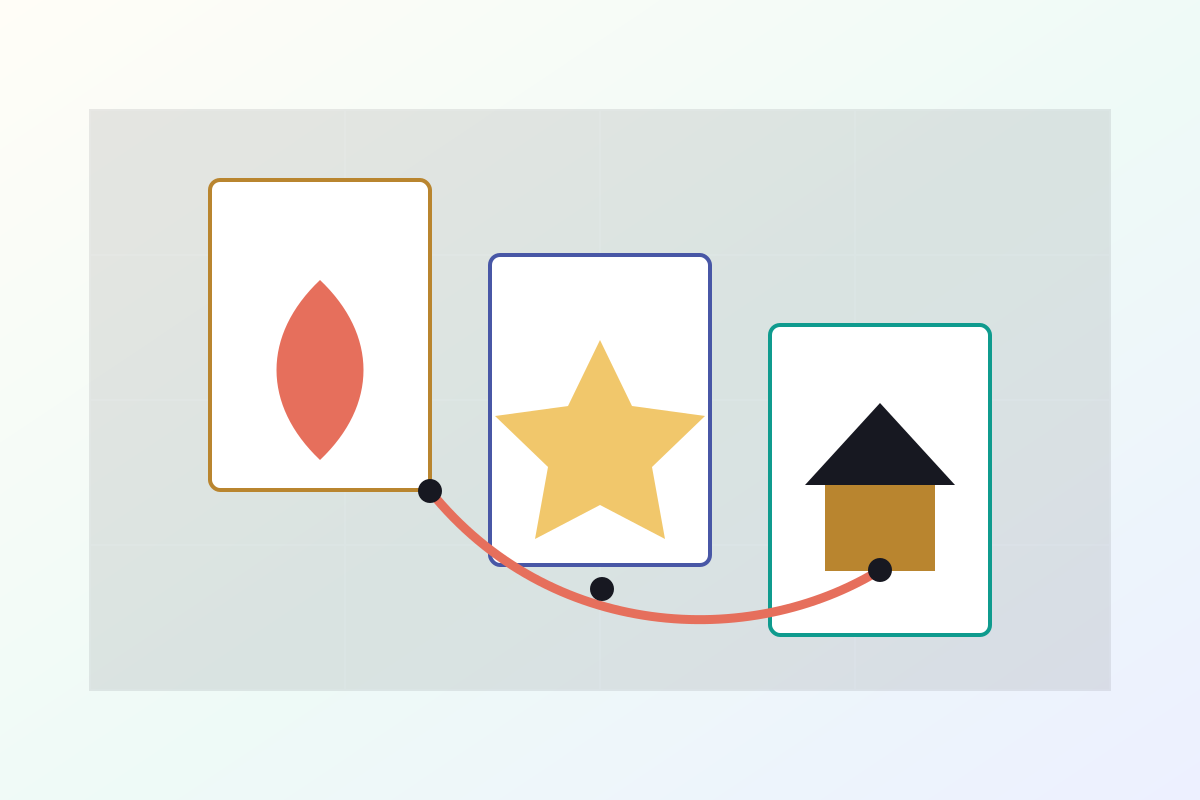
Timing questions or simple choices often need only two cards. A focused question can use three cards to see the situation, the dynamic and the direction. A comparison spread gives a pair of cards to each option so the comparison stays balanced.
The Celtic Cross suits complex problems with background, many parties and hidden factors. More cards are not always more accurate; the right spread actually prevents a reading from losing focus.
- Timing: two cards.
- A simple focus: three cards.
- Complex problems: the ten-card Celtic Cross.
Upright, reversed and card relationships
A reversed orientation does not automatically mean something bad. It can show energy that is blocked, internal, excessive, delayed, or needs to be seen from a different side. The interpretation must follow the position and the cards accompanying it.
A strong reading connects contradictions: the drive to move forward meeting the need to stop, an opportunity meeting the price that must be paid, or a hope meeting an old pattern. That is where Tarot becomes a mirror for decisions.
- Do not equate reversed with failure.
- Look for cards that reinforce or correct each other.
- Name the symbolic basis of any important conclusion.
Asking without losing control
Open questions such as "What do I need to understand?" often produce richer insight than forcing certainty. For big decisions, ask about the dynamics of each option, the risks, and the actions that could improve the outcome.
Tarot does not replace other people's consent, professional data or personal responsibility. Avoid reading someone's mind as fact; focus on relationship patterns and the responses available to you.
Tarot General at HDTIX
The HDTIX module can choose a spread based on the core of the question or use cards the user has selected. The spread is shown visually, while the interpretation flows as a personal reading with a main answer and relevant actions.
Arrive with one clear question. After the reading, separate the symbols that resonate from assumptions that are not yet proven, then choose the most sensible action.
- Use a specific question.
- Read the result as a tendency.
- Test the advice against real conditions.
Frequently asked questions
Which spread suits beginners?
Three cards is flexible enough to understand the situation, the main influence and the direction of action.
Are reversed cards always negative?
No. Reversed can mean blocked, internal, delayed, or in need of adjustment.
Can the same question be asked repeatedly?
It is better to give yourself time to act on the insight first, so repetition does not simply increase anxiety.